I approached The Field Museum with a burning question of how guests learn from digital kiosks in the museum space. Through conversations, I was told that the museum was interested in evaluating the current amount of choices in the menus of their digital information rails. The answer to this question would inform changes to these rails and any new digital interactives produced by the museum. We agreed to collaborate for my thesis and the work began.
METHODOLOGY:
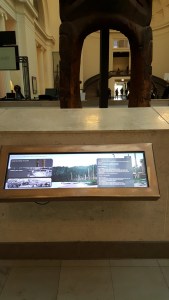
Initially I proposed something similar to an A/B test using a prototype over several weeks to address changes in the amount of menu choices by analyzing differences in before/after. Due to funding and other considerations, we decided to use a combination of the following:
- Observations at different rails
- Follow-Throughs
- Interviews with Developers, Project Managers and Content Creators
- Usage Statistics
RESEARCH QUESTIONS:
Initially we wanted to know: When and why do visitors experience choice overload with digital rail menus?
Over the course of the project, this evolved into –
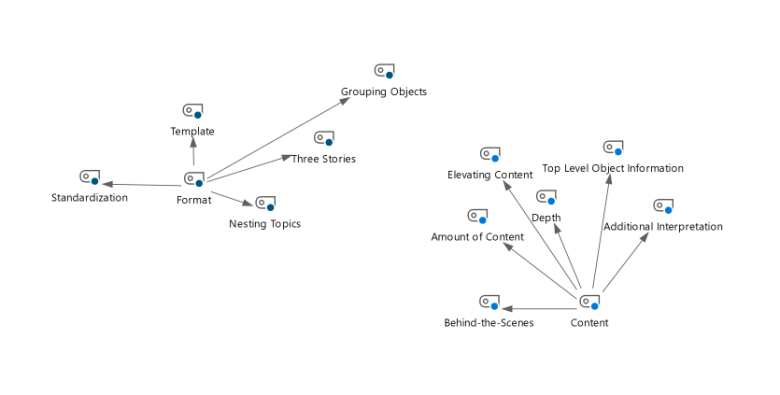
- How does the format affect choice overload?
- How much content affects information overload?
- How does the physical location affect retention rates for visitors?
MY ROLE:
As this project was for my master’s thesis, I acted as the primary researcher. I was the sole data collector for observations and interviews. I collaborated with the museum for convenient times to conduct research as well as understanding the development process of the digital rails. The software developer shared quantitative insights from the usage statistics for use in my analysis. After the data were collected, I transcribed and entered it into MAXQDA, a qualitative data analysis program. Here I used qualitative coding to categorize responses. After analysis, I delivered a report to the museum and my thesis committee. Additionally I presented my findings to GfK, who had assisted with funding.
Skills Highlight:
- Ethnographic research
- Inter-departmental Communication
- QDA Software
- Data Analysis
RESULTS:
Visitors do not differentiate between information overload (a function of content) and choice overload (a function of format)
For those visitors already interested in technology, the rails served to draw them to certain exhibits – however for those who were apathetic about technology, they only used the rails at exhibits in which they already had interest
 Christina Colman